


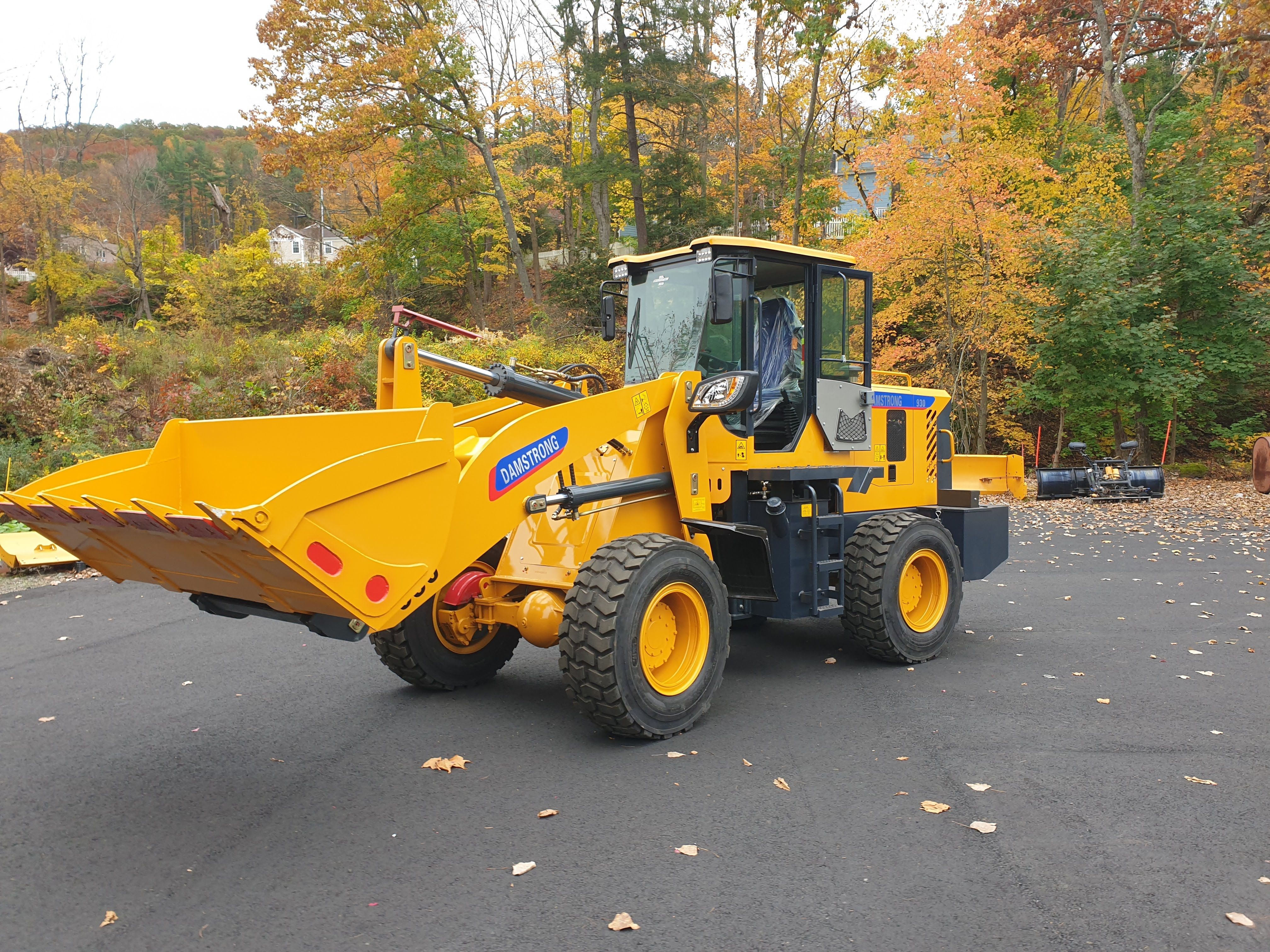
Wheel Loader Financing What Contractors and Snow Removal Companies Need to Know Before They Sign
t
tj@civsav.com
tj@civsav.com
Buying a wheel loader outright is not how most contractors and snow removal companies make the decision. The machine that fits the work costs real money, and tying up that capital in a single equipment purchase while payroll, fuel, insurance, and subcontractors all have their own demands on the same cash flow is not always the right move even when the purchase itself makes complete sense.
Financing a wheel loader is not a sign that a business cannot afford the equipment. It is a cash flow management tool that keeps operating capital liquid while putting productive equipment to work immediately. A loader that generates revenue on day one can service its own financing cost without drawing down the reserves that running a business requires.
But loader financing is not all the same. The structure of the agreement, the term length, the rate, the down payment, and whether the arrangement is a loan or a lease all affect what the total cost of the machine looks like at the end of the financing period. Understanding these variables before sitting down with a financing offer produces better decisions than evaluating a payment amount in isolation.
Equipment Loans vs Equipment Leases: The Foundational Decision
Before comparing specific financing terms, the first decision is whether to finance the loader through an equipment loan or an equipment lease. These are structurally different arrangements with different implications for ownership, total cost, and how the machine sits on the business's balance sheet.
An equipment loan works the same way as any secured loan. The lender provides funds to purchase the machine, the business makes fixed monthly payments over the loan term, and at the end of the term the business owns the loader outright with no further obligation. The machine is an asset on the balance sheet from day one, and the loan appears as a corresponding liability. As payments are made, equity in the asset builds.
Equipment loans work well for contractors who plan to operate the loader for many years, who want to build equity in the machine for eventual trade-in or resale value, and who are comfortable with the full purchase price being the basis of the financing.
An equipment lease provides use of the machine for a defined period in exchange for monthly payments, but the lessee does not own the machine at the end of the term. Some leases include a purchase option at end of term, often at fair market value or a predetermined residual. Others simply return the machine to the lessor when the lease expires.
Leases typically carry lower monthly payments than loans for equivalent equipment because the lessee is only financing the depreciation during the lease period rather than the full purchase price. For businesses that want access to current equipment without committing to long-term ownership, or that prefer to refresh their fleet on a defined cycle, leasing can be a better structural fit than an ownership-oriented loan.
The right choice between these structures depends on the business's cash flow profile, its tax situation, and how long it plans to keep the specific loader. This is a conversation worth having with an accountant before committing to either structure, particularly because the tax treatment of loan interest versus lease payments differs in ways that affect the total after-tax cost of the arrangement.
How Loader Financing Rates and Terms Work
Interest rate and term length are the two variables that most directly determine the monthly payment amount and the total cost of financing over the life of the agreement.
Interest rates on equipment loans vary based on the creditworthiness of the borrower, the age and condition of the equipment being financed, the lender's current cost of capital, and the loan term. Newer equipment from an established manufacturer with strong resale value is easier to finance at favorable rates than older or specialty equipment that carries more lender risk. Damstrong's wheel loaders, being new machines with documented specifications and manufacturer warranty, qualify for standard equipment financing treatment with established lenders.
Term length affects both the monthly payment and the total interest paid over the life of the loan. A shorter term means higher monthly payments but significantly less total interest. A longer term reduces the monthly payment but increases the total cost of the machine when all interest is included. The instinct to extend the term to lower the payment can be expensive if it is not evaluated against the total cost over the financing period.
For most wheel loader purchases, financing terms typically range from 24 to 72 months. Shorter terms are appropriate when the business has strong cash flow and wants to minimize total interest cost. Longer terms preserve monthly cash flow for businesses with seasonal revenue patterns or those managing multiple simultaneous equipment purchases.
Snow removal contractors in particular have a seasonal revenue dynamic that affects how financing terms should be structured. Revenue is concentrated in the winter months. Operating costs continue year-round. A financing payment that is comfortable against the winter revenue stream may be tighter in the shoulder seasons. Understanding that seasonal cash flow pattern before committing to a term and payment helps avoid a situation where the monthly payment becomes a burden in the off-season.
The relationship between loader ownership costs and year-round productivity is covered in the article on how to turn your loader into a year-round profit machine. A financed loader that generates revenue through multiple seasons makes a very different financial argument than one that only operates during winter.
Down Payment What It Does and Why It Matters
Most equipment financing requires a down payment, typically in the range of 10 to 20 percent of the purchase price. The down payment reduces the amount being financed, which reduces monthly payments and total interest cost. It also demonstrates to the lender that the borrower has skin in the game, which affects how favorably the application is evaluated.
For businesses with strong credit and an established track record, some lenders offer zero or low down payment programs on equipment loans. These programs preserve cash but result in higher total financing costs and a longer period of negative equity, where the outstanding loan balance exceeds the machine's current market value.
A business that can comfortably put 15 to 20 percent down on a loader purchase will typically access better rates, better terms, and a lower total cost of ownership than one that needs to finance the full purchase price. If the down payment cash is available but drawing it down would create strain on operating capital, the trade-off between a larger down payment and preserving liquidity is worth modeling before deciding.
What Lenders Look at When Evaluating a Loader Financing Application
Understanding the underwriting process helps businesses prepare their financing application to present the strongest possible case before the first conversation with a lender.
Business credit history is the starting point. Lenders look at how the business has handled existing credit obligations, whether payments have been made on time, and what the current debt load looks like relative to the business's revenue. A business with a clean credit history and manageable existing debt presents a lower risk profile and qualifies for better terms.
Time in business matters. Lenders are generally more comfortable with businesses that have been operating for two or more years and have a track record of revenue generation. Newer businesses may face more restrictive terms or higher rates because the lender cannot rely on an established operating history.
Financial statements provide the lender with visibility into the business's revenue, operating costs, and profitability. Recent bank statements, tax returns, and any existing financial statements help the lender understand whether the business generates enough cash flow to service the proposed loan comfortably alongside its existing obligations.
The equipment itself is collateral. A new Damstrong wheel loader with clear title, manufacturer warranty, and strong resale value is attractive collateral that supports favorable financing terms. Equipment with known resale value gives the lender confidence that the collateral position is solid if the loan ever needed to be resolved.
Personal guarantee from the business owner is a standard requirement for small and medium business equipment financing. This means the owner's personal credit and financial position is also part of the underwriting picture. Owners should be prepared for a personal credit pull as part of the application process.
The Business Case for Financing a Wheel Loader
Financing a loader is not just a cash flow convenience. For many businesses, it is the structure that makes the machine acquisition make economic sense in the first place.
A loader that would cost a significant lump sum to purchase outright can instead generate revenue immediately while its payment is serviced from that revenue. If the machine generates more in productive value per month than its financing cost, the business is cash flow positive on the purchase from the moment the loader goes to work. That calculation is the core argument for financing rather than waiting to accumulate the purchase price as cash.
For snow removal contractors adding a loader to their fleet, the revenue-to-payment calculation is particularly favorable in high-demand winters. A loader clearing commercial properties across a busy snow season can generate a return on its financing cost in a single winter while preserving the capital that operational expenses require throughout the year.
The article on equipment lifecycle planning and ROI in construction operations covers how to evaluate the full financial picture of a loader purchase, including how financing affects the return on investment calculation over the machine's productive life. Understanding that full lifecycle view makes the financing decision more strategic and less reactive.
Financing Through Damstrong How the Process Works
Damstrong offers financing support directly for wheel loader purchases, working with lenders who specialize in equipment financing for contractors and municipalities. The financing process is straightforward for qualified buyers.
The application begins with basic business and financial information. Credit review is completed through the financing partner. Approved buyers receive financing terms including rate, down payment requirement, and payment schedule. Once terms are accepted, the purchase is completed and the loader can be delivered.
For buyers who want to understand their financing options before selecting a specific loader model, starting the financing conversation early in the process rather than at the point of purchase decision allows buyers to understand their budget and payment range before committing to a specific configuration. Knowing what the financing supports allows the equipment selection to be made within that range rather than working backward from an equipment decision to see if the financing holds.
Damstrong's current loader lineup spans from the compact LTS23 for tight-access landscaping and light utility work through the 938 for heavy-duty industrial and bulk material applications. Each model has a different price point and therefore a different financing picture. The wheel loader size guide covers how to match loader size to the work's demands, which is the starting point for identifying which model belongs in the financing conversation.
Financing Multiple Attachments With the Loader
Wheel loader attachments significantly extend what the machine can do and which revenue opportunities it can pursue. Snow pushers, buckets, grapples, brooms, and material handling attachments all add capability that the base loader cannot provide without them.
Financing packages that include both the loader and the attachments in a single arrangement are often available and allow contractors to equip the machine completely from day one rather than adding attachments incrementally as cash flow allows. A snow removal contractor who needs the loader ready with a snow pusher before the first significant snowfall cannot wait until after winter to add the attachment.
The article on snow pusher and loader attachments for productive snow removal covers the attachment options available for Damstrong loaders and how they affect the machine's capability for winter work. For contractors building a financing package that includes both the loader and winter attachments, having a clear picture of which attachments are needed before the financing application is submitted allows the full package to be included in the loan amount.
Similarly, contractors who plan to use the loader for year-round work benefit from financing a broader attachment set that covers both winter and non-winter applications. The article on loader attachments that add value year-round covers which attachments justify their cost across multiple seasons, which directly affects whether financing them alongside the base machine makes economic sense.
Getting Started With Loader Financing Through Damstrong
The starting point for financing a Damstrong wheel loader is a conversation with the Damstrong team at 14 Beach St, Seymour CT. The team can walk through the current inventory, identify the loader and attachment configuration that fits the operation, and connect buyers with the financing options available for the specific purchase.
For buyers ready to move quickly, in-stock loaders with financing support can be moving from Connecticut to a job site within a short period of completing the financing process. Nationwide delivery means the financing conversation and the equipment conversation happen simultaneously regardless of where the buyer is located.
Let's discuss how we can help transform your business with our innovative solutions. Our team is ready to assist you with your unique needs.
Follow us
© 2025 Civilized Savage