


Wheel Loaders for Landscaping and Grounds Maintenance Why Compact Is the Right Size
t
tj@civsav.com
tj@civsav.com
The landscaping and grounds maintenance industry has a material handling problem that most operators solve with the wrong equipment. A skid steer handles the work most of the time, but it handles it inefficiently, it tears up turf that cost good money to install, and it requires a separate machine for certain loading operations that a wheel loader handles in a single, smooth motion.
The compact wheel loader has been gaining ground in landscape operations across the Northeast for exactly these reasons. Once a landscape company with a serious volume of mulch, topsoil, stone, and material handling work experiences the combination of speed, visibility, ground pressure, and load capacity that a properly sized compact wheel loader delivers, going back to handling all of that work with a skid steer feels like a step backward.
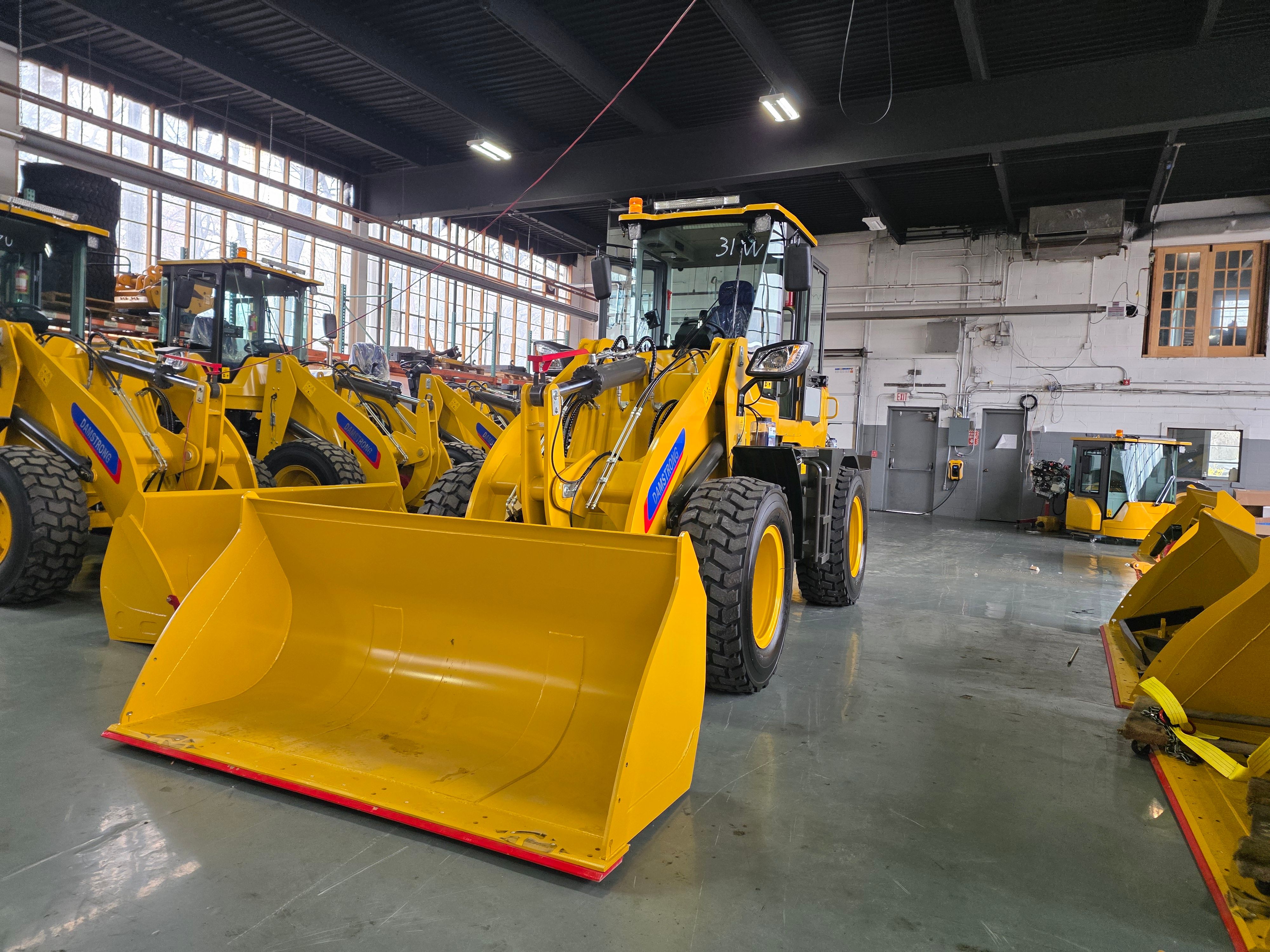
Damstrong manufactures compact wheel loaders in Seymour, Connecticut. The machines are built for the kind of sustained material handling work that landscape companies run through a full season, and the attachment options extend the loader's usefulness across the full range of tasks that grounds maintenance operations encounter from spring through fall and into the winter snow removal season.
The Material Handling Reality of a Landscape Operation
A landscape company running full crews through a busy season handles enormous volumes of material. Mulch by the yard. Topsoil and loam for new installations. Crushed stone and decorative aggregate for hardscape projects. Compost and soil amendments. Sod pallets. Plant materials from nursery deliveries. All of it needs to be picked up, moved, and placed efficiently across jobs that are measured in hours not days.
The equipment that handles this material movement determines how much of the workday is spent doing productive installation work versus loading, unloading, and moving material. A crew that spends 20 percent of its time waiting for material to be positioned is a crew that is 20 percent less productive than a crew whose material is staged precisely where they need it when they need it.
Skid steers handle material movement but with limitations that compound across a full season. The lift mechanism geometry on most skid steers produces a load arc that brings the bucket over the cab during lifting, which limits visibility of the load and the placement target in ways that require operator experience to compensate for. The high ground pressure of skid steer tracks or tires on soft spring ground tears up finished turf and leaves ruts that require repair. And the operator position inside the enclosed cab of most skid steers makes it harder to work in tight planting areas and around existing landscape features precisely.
A compact wheel loader addresses all of these limitations while matching or exceeding the skid steer's material handling capacity in the loads per hour that matter most to a landscape operation's productivity.
Why Compact Wheel Loaders Work for Landscaping Specifically
The design characteristics of a compact wheel loader fit landscape work in ways that are specific to this industry rather than being generic equipment advantages.
The parallel lift linkage that Damstrong's compact wheel loaders use maintains a consistent bucket angle throughout the lift cycle, which means the operator can watch the load stay level rather than managing bucket angle through the lift. On a job where the bucket is carrying a full load of mulch to a planting bed or moving topsoil around an established garden, this consistency reduces spill and reduces the skill level required to work productively.
Ground pressure on a wheel loader is distributed across four tires rather than concentrated in the track contact patch of a skid steer or compact track loader. For landscape operations where protecting finished turf and navigating around existing plantings matters as much as moving material, the lower ground pressure footprint of a compact wheel loader on soft spring turf is a meaningful operational difference. Ruts that require repair represent labor cost and customer dissatisfaction that the right equipment selection prevents.
Visibility from the operator position on a compact wheel loader is better than from the enclosed cab of most skid steers for the specific tasks of fine material placement and working around landscape features. The open or semi-open operator position on some compact wheel loader configurations and the forward-visibility characteristics of the wheel loader's lift geometry make it easier to see exactly where the bucket is going when precision matters.
The road speed of a compact wheel loader for moving between staging areas and work zones across a job site, or from the truck to the work area, is faster than a skid steer's typical travel speed. On larger commercial grounds maintenance accounts where the material staging area and the work zones may be separated by significant distance, this travel speed advantage accumulates into meaningful time savings across a day.
The Applications Where a Wheel Loader Outperforms a Skid Steer in Landscape Work
Mulch and Bulk Material Delivery
Mulch delivery from a bulk delivery truck to a planting bed or a staging pile requires a loader that can move efficiently between the truck and the placement point, carry a full bucket without spillage on the travel, and place precisely in the target area. A compact wheel loader in the right size class handles this application more efficiently than a skid steer because the bucket capacity is higher, the travel speed is faster, and the placement visibility is better.
For landscape companies that apply thousands of yards of mulch per season across commercial maintenance accounts, the productivity difference between handling that volume with a wheel loader versus a skid steer adds up to a real difference in how many yards get placed per day per operator.
Topsoil and Loam Handling
New lawn installations, garden renovations, and grading projects require moving topsoil and loam from delivery piles to placement areas with enough precision to hit the target grades without creating the undulations that careless loading leaves behind. A compact wheel loader with a smooth bucket control system and good operator visibility handles this work cleanly.
For landscape contractors who do significant new installation work, the ability to fine-grade topsoil with the loader bucket rather than requiring rakes and hand labor for the final grade adjustment depends on having a loader with responsive hydraulic control and good visibility from the operator position.
Stone and Aggregate Handling
Decorative stone, crusher run, and landscape aggregate for hardscape projects involve the same material handling pattern as mulch and topsoil but with heavier loads that stress light equipment more severely. A compact wheel loader built for sustained heavy material handling provides the structural durability and hydraulic capacity that stone handling requires without the wear rate that puts lighter-duty equipment into the shop.
Pallet and Package Handling
Nursery deliveries arrive on pallets. Sod comes in rolls or on pallets. Soil amendment products and fertilizer materials arrive packaged. Moving these materials from delivery trucks to staging areas or directly to work areas requires a loader with forks or a pallet fork attachment rather than a bucket. A compact wheel loader with a quick-attach system that allows fast switching between bucket and forks handles this transition without the repositioning and attachment change delay that interrupts the workflow.
The full range of loader attachments that extend a compact wheel loader's capability across different material types and handling tasks is covered in the article on loader attachments that build year-round value and productivity. For landscape operations that encounter different material types throughout the season, the attachment versatility of a wheel loader with a compatible quick-attach system is as important as the base machine's lifting and travel performance.
Matching the Damstrong Loader Model to Landscape Operation Scale
Damstrong's loader lineup spans from the LTS23 mini loader through the 938 heavy-duty model. For landscape and grounds maintenance operations, the right model depends on the scale of the operation's material handling volume and the physical access requirements of the accounts being serviced.
The LTS23 is the most compact option in the Damstrong lineup and is suited for landscape operations that work in tight residential environments where a standard compact wheel loader would be too large to navigate without damaging existing features. Gardens with narrow gate access, backyard installations where the machine must enter through a standard residential gate, and highly detailed landscape environments where the machine's footprint is as important as its capacity are applications where the LTS23's minimal dimensions matter.
The 930 and 930 HD serve the majority of commercial grounds maintenance and landscape installation operations where the material volumes are significant and the job sites have adequate access for a standard compact wheel loader. These models balance bucket capacity, lift height, and operating weight in a package that handles the core material handling tasks of a busy landscape season efficiently.
The 936 steps up in capacity for operations running high daily mulch and material volumes on commercial accounts, where the additional bucket size and lifting capacity translate to fewer cycles to complete the same material handling task.
For operations that want to understand which model fits their specific account mix and material handling volume, the loader size matching guide that helps operators calculate which Damstrong model fits their operation is covered in the article on how to choose the right wheel loader size for your specific needs.
Winter Utilization: Making the Loader Investment Work Year-Round
The landscape season in Connecticut and the Northeast ends in November or December and does not restart until March or April. An equipment investment that generates revenue only eight months of the year carries the full annual cost of ownership against eight months of productive utilization.
Compact wheel loaders with snow pusher attachments turn the off-season from a cost period into a revenue period. The same machine that moved mulch and topsoil through the spring and summer season pushes snow from commercial parking lots and municipal facilities through the winter. The attachment change from bucket to snow pusher takes minutes, and the loader is generating revenue again.
For landscape companies that currently contract out their winter snow removal accounts or that simply have no winter revenue from their equipment, adding snow removal capacity through a compact wheel loader with a snow pusher creates a business dimension that the landscape operation's existing commercial customer relationships support naturally. The commercial property managers who pay for landscape maintenance during the growing season are the same property managers who need snow removal during the winter.
The snow removal applications that compact wheel loaders serve and how to size the snow pusher correctly for the loader and the accounts being serviced is covered in the article on efficient snow removal with wheel loaders and snow pusher attachments. Building the winter revenue stream that the same machine generates is the calculation that turns a landscape equipment investment into a year-round profit center.
Demonstrating the Loader at Your Operation
The year-round profit machine calculation that shows how a compact wheel loader generates revenue across the full calendar year including the landscape season and the snow removal season is covered in the article on how to turn your compact wheel loader into a year-round profit machine. That calculation is the business case for the equipment investment from a landscape company's perspective.
Let's discuss how we can help transform your business with our innovative solutions. Our team is ready to assist you with your unique needs.
Follow us
© 2025 Civilized Savage