


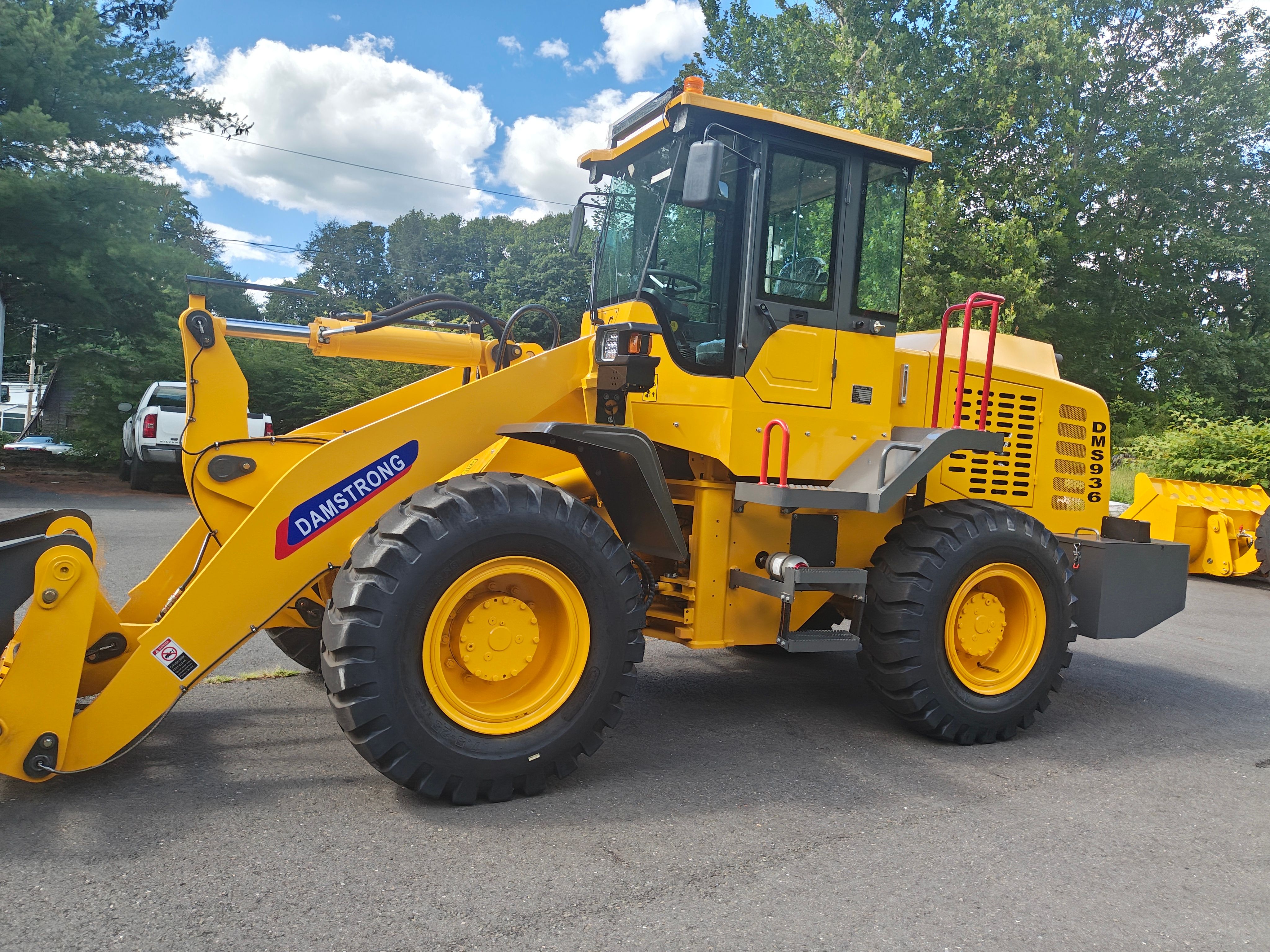

Landscaping work has grown well beyond hand tools and small equipment for a large share of commercial and municipal contractors. Grading a new development site, moving hundreds of yards of topsoil or mulch, clearing brush ahead of a planting phase, and finishing hardscape installations all move faster and more profitably when a contractor has the right heavy equipment matched to the actual scale of the work. Choosing that equipment thoughtfully, rather than defaulting to whatever happens to be available, is one of the clearer paths to improving margin on landscaping contracts.
Wheel Loaders as the Backbone of Material Handling
For landscaping operations that regularly move bulk material, topsoil, mulch, gravel, and stone among the most common, a wheel loader is frequently the single most productive piece of equipment a contractor can add to a fleet. A properly sized wheel loader moves material at a volume and speed that skid steers and smaller equipment simply cannot match, which directly affects how many yards a crew can place in a working day and how competitively a contractor can bid material-intensive projects.
Matching loader size to actual project scale matters considerably here, since an oversized loader wastes fuel and maneuvering room on smaller residential sites, while an undersized loader creates a bottleneck on larger commercial projects where material volume is the primary constraint on daily productivity. The considerations that go into this sizing decision are covered in detail in our wheel loader size guide, which walks through matching bucket capacity and machine size to the material volumes a specific landscaping operation typically handles.
Attachments That Extend a Loader Beyond Material Moving
A wheel loader's usefulness on a landscaping fleet extends well past bucket work when equipped with the right attachments. Grapples for brush and debris clearing, forks for handling palletized hardscape materials like pavers and retaining wall block, and grading attachments for finish work all turn a single machine into a genuinely versatile platform capable of handling multiple phases of a landscaping project without switching equipment.
This attachment flexibility is central to getting real year-round value from equipment that might otherwise sit idle outside of peak material-moving seasons. Our article on turning a loader into a year-round profit machine covers this concept directly, and the same logic applies whether the off-season work involves site clearing, hardscape material handling, or other landscaping tasks that fall outside a loader's most obvious bucket-and-bulk-material role. Contractors who plan attachment purchases around this broader utilization strategy generally see faster payback on the equipment investment than those who buy a loader for one narrow task alone.
Compact Equipment for Tighter Residential and Detail Work
Not every landscaping job calls for full-size equipment, and residential properties, tight urban lots, and detail work around existing structures or established landscaping frequently call for more compact machinery that can maneuver in confined spaces without the footprint and turning radius a larger loader requires. Compact loaders and smaller equipment configurations fill this role, trading raw material-moving capacity for the maneuverability that detail-oriented residential work demands.
The tradeoff between compact and full-size equipment for landscaping applications specifically is addressed in our overview of wheel loaders for snow removal and compact loaders, which, while framed around snow work, covers sizing and maneuverability tradeoffs that apply equally to landscaping contractors weighing compact versus full-size equipment for their own project mix. A landscaping fleet that includes both categories, rather than betting entirely on one size class, is generally better positioned to bid a wider range of project types competitively.
Attachment Compatibility Across a Mixed Landscaping Fleet
Landscaping contractors running multiple pieces of equipment, whether across several loaders or a mixed fleet including other machine types, benefit from standardizing attachment compatibility wherever practical, so that grapples, forks, and grading attachments can move between machines as project needs shift rather than being locked to a single unit. This flexibility becomes particularly valuable during peak season when equipment utilization is highest and the ability to reassign attachments across the fleet on short notice directly affects how many jobs a crew can keep moving simultaneously.
The practical considerations involved in ensuring attachments work reliably across different equipment in a fleet are covered in our article on wheel loader attachment compatibility and jobsite efficiency, which is worth reviewing before a landscaping operation invests in additional attachments, since compatibility planned at the purchasing stage avoids the frustration of discovering an expensive attachment does not fit the machine it was meant to support.
Grading and Site Preparation Equipment
Before planting, hardscape installation, or turf establishment can begin, most landscaping projects of any real scale require grading work to establish proper drainage and surface contours. Equipment capable of fine grading, whether through specialized attachments on a wheel loader or dedicated grading equipment, determines how efficiently a contractor can move from rough site preparation to finish-ready ground condition.
This grading phase is often underestimated in project timelines relative to the more visible planting and hardscape work that follows it, but poor grading work creates drainage problems that surface long after a project is complete and the contractor has moved on, making the quality of grading equipment and technique a genuine factor in long-term client satisfaction and repeat business, not just short-term project completion speed.
Equipment Lifecycle Planning for Landscaping Fleets
Landscaping contractors investing in heavy equipment should think beyond the initial purchase decision to how that equipment will be utilized, maintained, and eventually replaced across its useful working life. Equipment that sits idle for large portions of the year delivers poor return relative to its purchase and ownership cost, which is part of why attachment versatility and year-round utilization planning matter so much for landscaping-specific equipment decisions.
The broader framework for thinking through equipment purchases as a lifecycle investment rather than a single transaction is covered in our article on equipment lifecycle planning and construction ROI, which applies directly to landscaping contractors evaluating whether a given piece of equipment will earn its keep across enough project types and enough months of the year to justify the investment.
Reducing Downtime Through Proactive Equipment Planning
Equipment downtime on a landscaping project creates the same cascading schedule problems it creates on any construction site, delayed material delivery, idle crew time, and client relationships strained by missed completion dates. Planning equipment needs and maintenance schedules proactively, rather than reactively addressing issues as they arise, protects a landscaping operation's ability to hit project deadlines consistently across a busy season.
Our article on reducing downtime through loader attachments and jobsite planning covers practical steps for building this kind of proactive planning into daily operations, and the underlying principles apply broadly across whatever equipment mix a landscaping contractor ultimately settles on for their fleet.
Operator Training and Equipment Efficiency
Even the best-matched equipment underperforms in the hands of an undertrained operator, and landscaping contractors sometimes underweight training relative to the equipment purchase decision itself. An experienced operator moves material faster, damages fewer attachments and less surrounding landscaping, and completes grading and finish work to a standard that reduces callback requests, all of which affect the actual return a contractor sees on their equipment investment far more than the specific make or model chosen.
The safety and productivity considerations covered in our wheel loader operator training guide apply directly to landscaping crews, and contractors who invest in proper operator training alongside their equipment purchases typically see that investment pay back through faster project completion and fewer costly mistakes on sites where landscaping equipment is working close to existing structures, irrigation systems, and established plantings that a less careful operator could damage.
Rental Options for Seasonal or Project-Specific Needs
Not every landscaping operation needs to own every piece of equipment outlined here, particularly for contractors whose project mix includes occasional large-scale work that does not justify a full-time equipment purchase. Rental access to wheel loaders and attachments for a specific project or season allows smaller landscaping operations to bid larger contracts without carrying the ownership cost of equipment that might sit idle during slower periods of the year.
The considerations that go into this rent-versus-own decision for loader equipment specifically are covered in our article on loader rentals in Connecticut, which walks through when rental access makes more financial sense than ownership for a landscaping business managing variable project volume across a typical operating season.
Matching Equipment Investment to Project Mix
The right heavy equipment lineup for a landscaping operation depends heavily on the specific mix of project types that contractor regularly bids and completes. An operation focused primarily on large commercial site development has different equipment priorities than one specializing in residential design-build work with frequent smaller, detail-oriented projects. Evaluating actual project history and anticipated future work honestly, rather than purchasing equipment based on what seems impressive or what a competitor happens to own, produces a fleet that genuinely improves efficiency and profitability rather than one that looks capable on paper but sits underutilized for large stretches of the operating season.
Share this article:
Need Expert Guidance?
Let's discuss how we can help transform your business with our innovative solutions. Our team is ready to assist you with your unique needs.
Follow us






© 2025 Civilized Savage
Based in USA