


Wheel Loaders for Municipal Snow Removal What Government Fleet Managers Need to Know
t
tj@civsav.com
tj@civsav.com
Municipal snow removal is not optional. When two inches of snow falls overnight in a Connecticut town, the roads have to be clear before the morning commute. When six inches come down over a weekend in a Massachusetts municipality, the parking lots at town hall, the library, and the public works yard have to be open for business Monday morning. School districts cannot open if their parking lots and access roads are buried. Emergency services cannot operate efficiently if secondary roads are impassable.
The pressure on municipal fleet managers to deliver results every storm, with equipment that is maintained, reliable, and operated by a crew that knows how to use it, is consistent throughout every winter season. The equipment choices that support that delivery determine whether a municipality's snow removal program runs efficiently or runs the fleet manager ragged managing breakdowns, callbacks, and complaints.
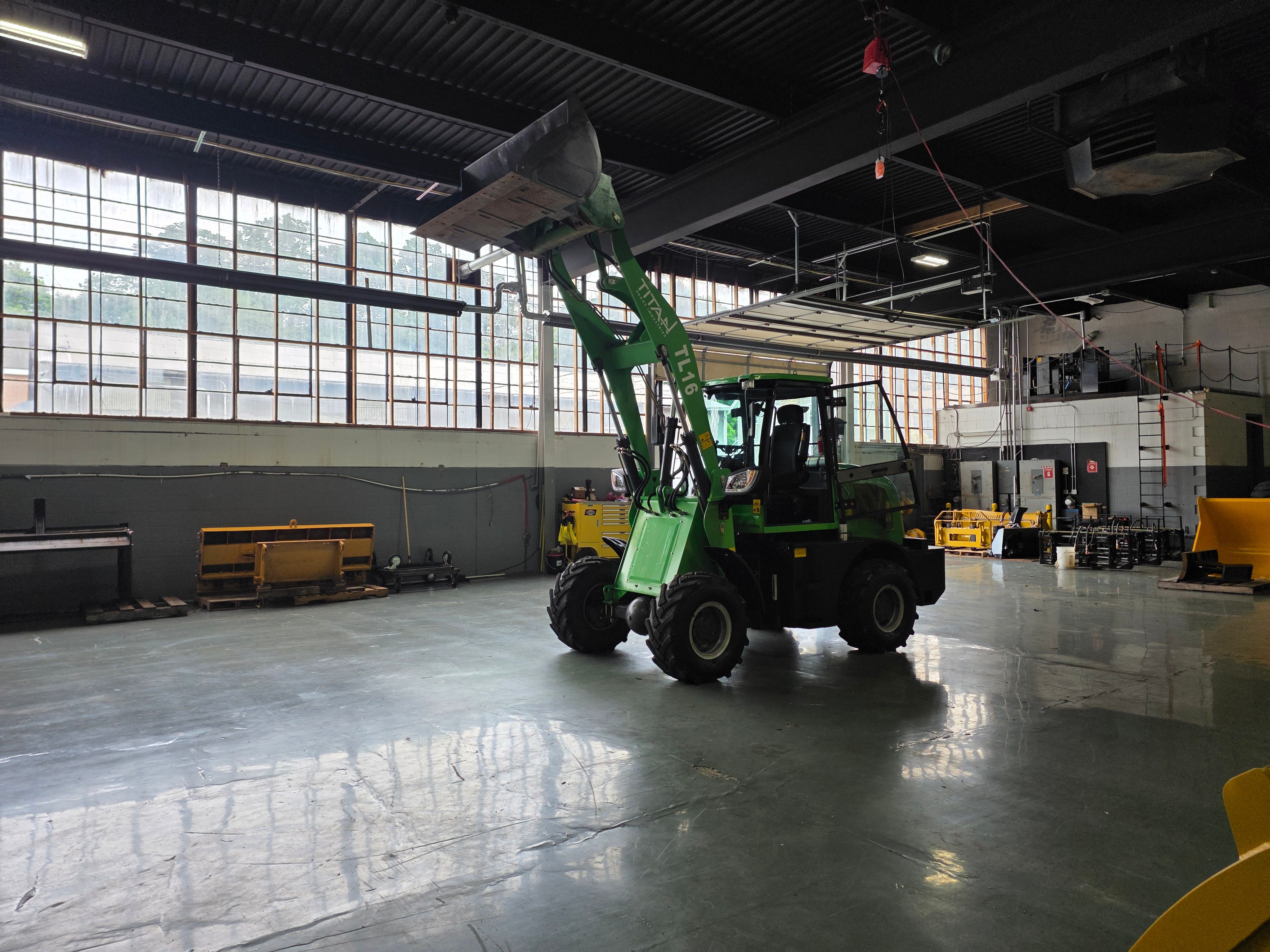
Compact wheel loaders with snow pusher attachments have become an increasingly central part of municipal snow removal programs across the Northeast because they address specific limitations of the traditional municipal snow removal approach at a cost that fits government procurement realities. This article covers what municipal fleet managers should understand about integrating wheel loaders into a snow removal program, how to match the right loader and attachment to specific municipal applications, and what the total cost of ownership picture looks like for government fleet operations.
Why Municipalities Are Moving to Compact Wheel Loaders for Snow Removal
The traditional municipal snow removal fleet is built around truck-mounted plows and salt spreaders. These work well for road clearing. They are less effective for the other snow removal tasks that a municipality needs to accomplish every storm.
Parking lots at government facilities, parks, and public spaces require a machine that can push and stack snow rather than simply plow it to the side of the road. A truck plow running through a parking lot is slow, requires multiple passes, and cannot stack snow at the lot perimeter the way a wheel loader with a snow pusher can.
Pedestrian areas, sidewalks around municipal buildings, and narrow access areas that a full-size truck cannot reach without damaging the surrounding landscaping or hardscape need a compact machine that can maneuver precisely without the turning radius limitations of a large truck.
Cleanup operations after the primary storm pass, moving snow piles that are blocking sight lines, clearing around fire hydrants and storm drain grates, and tidying the edges of lots that plow trucks left ragged all benefit from the maneuverability and precise control of a compact wheel loader.
The compact wheel loader fills the space in a municipal snow removal program between the large truck plow that clears the road and the hand labor that clears what the truck cannot reach. In most municipalities, that space represents a significant portion of the total snow removal workload by time even though it represents a smaller portion of the total square footage cleared.
The comparison between different snow removal equipment approaches and how compact wheel loaders fit into a complete snow removal operation is covered in the article on choosing the right wheel loader for snow removal applications. The municipal context adds procurement, budget, and operational considerations on top of the core equipment selection analysis.
Matching Loader Model to Municipal Application
Not every municipal application requires the same loader capability. The size, the lift capacity, and the attachment compatibility of the loader should match the primary applications the municipality will be using it for.
Compact Loader for Tight Facilities and Pedestrian Areas
Municipalities with older facility layouts, narrow sidewalks, tight courtyards, and historic downtown areas where larger equipment cannot safely maneuver need the smallest footprint loader that can still carry a productive snow pusher. The LTS23 mini loader serves these applications with an agile, lightweight platform that accesses areas a larger machine cannot without landscape damage or hardscape contact.
For municipalities that need to clear around bus stops, at transit facilities, and in pedestrian corridors where the public may be present even during clearing operations, the compact size of a mini loader reduces the exclusion zone required around the machine during operation.
Mid-Size Loader for Standard Municipal Facilities
The 930 and 936 series loaders serve the standard municipal facility footprint that includes public works yards, municipal office parking lots, parks department facilities, and the secondary parking areas at government complexes. These loaders carry larger snow pusher widths than the compact series, which means they cover more square footage per pass and complete the clearing operation faster.
For municipalities with multiple facilities to clear per storm, the production efficiency of a mid-size loader over multiple sites through a storm event is a real operational advantage. The crew time saved by completing each site faster accumulates across a full storm event into meaningful labor cost reduction.
Heavy-Duty Loader for Airport and Large Facility Operations
Municipalities that operate regional airports, large recreation facilities, or major event venues with significant paved area per storm need the higher capacity of the 938 or 930 HD for efficient snow pusher operations. These loaders carry the widest snow pusher configurations and move the highest volume of snow per hour, which matters when thousands of square feet of parking and access area need to be cleared within a defined timeframe before a facility opens.
The wheel loader size selection framework that helps fleet managers match loader capacity to the specific clearing demands of their facilities is covered in the article on how to choose the right wheel loader size for your operation. Running that analysis for each specific municipal facility before selecting a loader model produces a better fit than buying to a general municipal average.
Snow Pusher Selection for Municipal Operations
The snow pusher attachment is the direct interface between the loader and the snow it is clearing. Municipal operations have specific snow pusher requirements that differ from those of a private contractor in ways that affect which pusher configurations deliver the best results.
Edge Type for Varied Municipal Surfaces
Municipal facilities include an unusually wide variety of surface types that the snow pusher must clear without causing damage. A public works yard may have a combination of asphalt, concrete, and gravel surfaces within the same facility. A park may include paved parking, decorative brick pedestrian areas, and turf that borders the paved surface.
Rubber edge snow pushers protect decorative and sensitive surface materials from the blade contact damage that steel cutting edges produce. For municipalities clearing brick pavers, stamped concrete, and other premium hardscape materials at government facilities, rubber edge protection prevents the surface damage that generates repair costs and resident complaints.
Steel edge pushers cut closer to the surface on hard asphalt and concrete, which reduces the snow left behind after each pass. For high-traffic facilities where ice formation on residual snow is a safety and liability concern, the cleaner scrape of a steel edge produces better results. The detailed comparison between rubber and steel cutting edges and when each is appropriate is covered in the article on steel edge versus rubber edge snow pushers and how to choose.
Pusher Width for Efficient Coverage
Snow pusher width determines how many passes are required to clear a given area. A wider pusher covers more ground per pass but requires adequate clearance on all sides of the work area to maneuver without obstacles. Municipal parking lots with defined lane markings, light poles, and concrete wheel stops require pusher widths that allow maneuvering without constant adjustment.
Sizing the pusher width correctly for each facility rather than selecting a single width for all applications improves efficiency on tight sites without sacrificing production on open sites. For municipalities that are outfitting multiple loaders for multiple facilities, different pusher widths for different site types produce better overall results than a one-size compromise.
The snow pusher sizing analysis that helps operators match pusher width to their specific clearing area dimensions is covered in the article on how to determine what size snow pusher you actually need.
Government Procurement Considerations for Wheel Loaders
Municipal equipment purchases typically involve procurement processes that differ from private contractor equipment buying. Fleet managers should be aware of these considerations when planning a wheel loader acquisition.
Budget Cycles and Procurement Timing
Municipal capital equipment purchases are typically funded through the annual budget process. Fleet managers who identify the need for a wheel loader should begin the specification and pricing process early enough in the budget year to include the purchase in the capital equipment request for the following fiscal year. Waiting until the budget is approved and then rushing the procurement typically produces worse results than building the specification and vendor relationship before the formal procurement begins.
Specification Writing for Competitive Procurement
Many municipal procurement processes require competitive bids based on a written specification. Writing a specification that is detailed enough to ensure the bid responses are for equivalent equipment, while being open enough to allow legitimate competition, requires understanding the specific performance requirements of the application rather than defaulting to a generic wheel loader specification.
Damstrong's team can assist municipal fleet managers in developing equipment specifications that reflect the actual operational requirements of the municipality's applications. This pre-procurement support does not commit the municipality to a purchase but helps ensure that the bid process produces responses that can be fairly evaluated against each other.
Total Cost of Ownership in Government Fleet Decisions
Government fleet decisions are increasingly evaluated on total cost of ownership rather than lowest acquisition price, because procurement auditors and budget committees have recognized that the lowest bid price often produces the highest operational cost. A wheel loader with a lower acquisition price but higher maintenance frequency, shorter service intervals, and limited parts availability in the municipal fleet's normal service network may cost significantly more over a ten-year operational life than a higher-acquisition-price loader with better reliability and lower maintenance burden.
The lifecycle planning framework that helps fleet managers evaluate equipment decisions on a total cost basis, including acquisition, maintenance, and operational cost over the expected service life, is covered in the article on equipment lifecycle planning and ROI for construction and fleet operations. Municipal fleet managers applying this framework to wheel loader acquisition decisions produce more defensible budget justifications than those who focus on acquisition price alone.
Year-Round Utilization Maximizing the Municipal Equipment Budget
A wheel loader purchased for snow removal that sits unused from April through November represents a significant capital investment with limited annual utilization. Municipal fleet managers who identify year-round applications for their wheel loaders improve the utilization rate of the equipment and produce a more defensible cost-per-use justification for the acquisition.
The range of attachments that allow a wheel loader to serve productive roles throughout the non-winter months includes general purpose buckets for material handling and stockpile management at public works yards, forks for handling palletized materials and equipment at municipal facilities, and sweeper attachments for spring cleanup on parking lots and access roads after winter sand application.
Public works departments that need material handling capability throughout the year for road base management, catch basin repair staging, park maintenance material movement, and the general-purpose lifting and loading that infrastructure maintenance requires can apply those operational needs to the wheel loader utilization calculation.
The specific attachment types that deliver productive non-winter applications and how to evaluate their contribution to year-round loader utilization are covered in the article on six loader attachments that add year-round value to your machine. For municipal fleet justifications that need to demonstrate value beyond the snow season, the year-round utilization case is as important as the winter performance case.
Operator Training for Municipal Crews
Municipal equipment is operated by public employees whose training and certification level affects both operational performance and municipal liability. Wheel loader operator training that covers safe operation, attachment handling, and the specific techniques for efficient snow pusher use produces better results and lower incident rates than assigning the machine to crew members who learn by experience.
The operator safety training guide that covers the key elements of wheel loader operation and what qualified operators need to understand about machine capabilities and limitations is covered in the article on safety training guide for wheel loader operators. For municipalities where equipment damage or operator incidents carry public accountability implications that private operations do not face in the same way, documented operator training is a meaningful risk management investment.
Getting Started With Municipal Wheel Loader Procurement
Damstrong serves municipal customers across Connecticut and nationwide with compact wheel loaders built in Seymour, CT and snow pusher attachments sized for the full range of government facility applications. The team has experience working with municipal procurement requirements, budget justification documentation, and the specification development that helps fleet managers through the acquisition process.
Let's discuss how we can help transform your business with our innovative solutions. Our team is ready to assist you with your unique needs.
Follow us
© 2025 Civilized Savage